
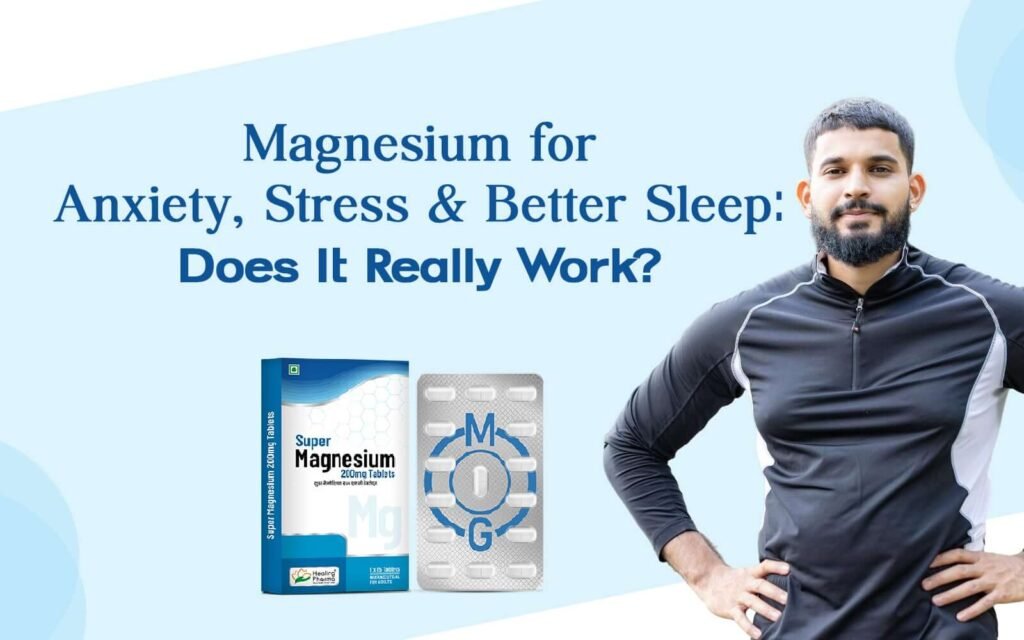
One of the most common complaints I hear from patients with anxiety is, “Doctor, I am exhausted but I cannot fall asleep, and even when I sleep, I wake up feeling tired.” Poor sleep and anxiety feed each other, creating a vicious cycle. Emerging research shows that adequate magnesium intake is associated with better sleep duration, quality and less daytime sleepiness. Magnesium appears to support the natural production of melatonin, our sleep hormone, and may lower cortisol, the stress hormone that keeps the brain on high alert.
From a physiological point of view, magnesium helps relax muscles and calm overactive nerve cells, which can make it easier to drift into deeper, more restorative sleep. Some studies of magnesium supplementation have reported modest improvements in insomnia severity and sleep efficiency, especially in people who had low magnesium or poor sleep to begin with. However, the evidence is still mixed; being deficient in magnesium clearly harms sleep, but taking extra when you are not deficient does not guarantee “perfect sleep”.
In my practice, I use a step-wise approach. First, I work on food-based magnesium (greens, nuts, seeds, millets), evening digital detox, fixed sleep–wake timing and relaxation techniques like yoga nidra and slow breathing. If, after proper evaluation, I suspect low magnesium or see consistent symptoms, I may recommend a gentle magnesium supplement at night, chosen according to the person’s digestion, medical history and medication list. Remember, any supplement is an adjunct, not a shortcut; calming the mind for sleep still requires lifestyle discipline, emotional support and, when needed, professional psychological or psychiatric care.
Editorial note (NewsForYou Live):
In this article, Senior Nutritionist and Naturopathy & Yoga Specialist Dr. Hiral Prajapati clarifies that magnesium can support healthier sleep in people with anxiety, particularly when deficiency and lifestyle issues are addressed together under expert supervision.