
By Dharmesh Prajapati March 19, 2026
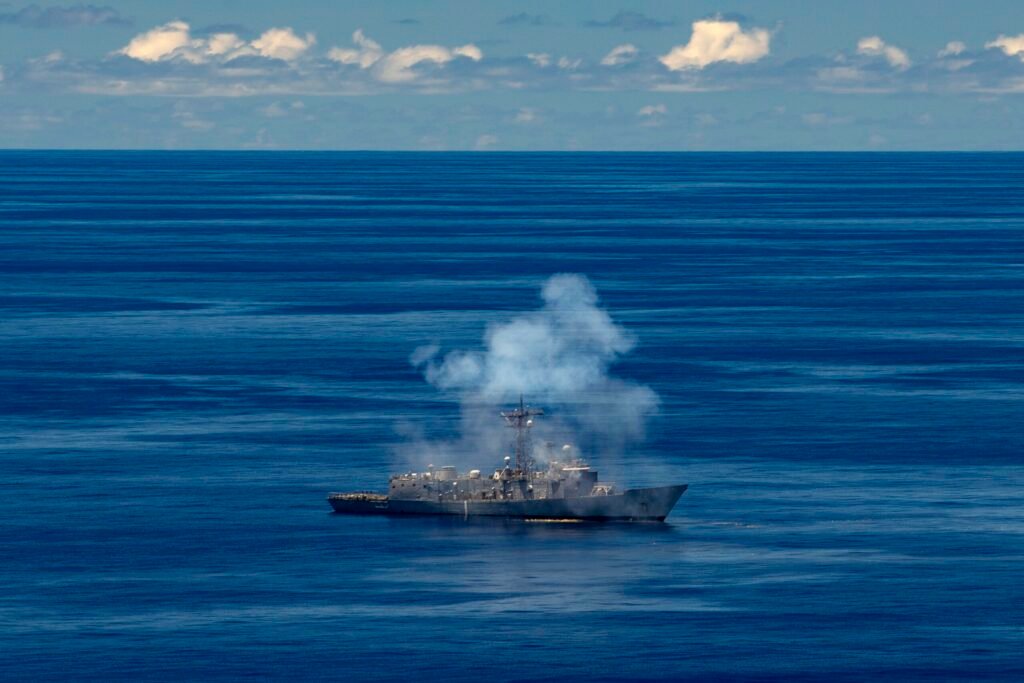
SOUDA BAY, CRETE – As the fire-damaged USS Gerald R. Ford limps into port in Greece, a secondary, perhaps more critical failure is being discussed in hushed tones at the Pentagon. It isn’t just the soot and smoke from the laundry fire that forced the world’s largest carrier to retreat—it is the catastrophic “cycling failure” of its multi-billion dollar Electromagnetic Aircraft Launch System (EMALS).
The Ford was designed to be the first “digital” carrier, replacing 70-year-old steam technology with powerful magnets. But in the 45°C (113°F) heat and 90% humidity of the West Asian coast, the “future of naval warfare” has hit a physical wall.
The Humidity Hurdle
Steam catapults, used on every other U.S. carrier, are rugged and mechanical. The EMALS, however, relies on massive banks of capacitors and precise electronic timing. Reports from the deck suggest that the extreme salinity and humidity of the Persian Gulf have caused “micro-corrosion” in the sensitive control sensors.
When the sensors fail, the catapults go offline. During the peak of the drone swarms last week, the Ford reportedly suffered a 40% failure rate in its launch cycles. Instead of launching a jet every 45 seconds, the deck was frozen for minutes at a time—a lethal delay in a combat zone.
The “Over-Engineering” Trap
This technical struggle highlights a recurring theme in the Trump administration’s military strategy: the “Dual Standard” of technology. We demand that our soldiers fight with the most complex tools ever built, yet we fail to account for the brutal reality of the environments they must fight in.
“We built a Ferrari to do a Jeep’s job,” one former Navy engineer remarked. “A Ferrari is great on a track in Italy, but it doesn’t like salt-water spray and 110-degree heat in the Red Sea.”
The Strategic Cost of Innovation
The failure of the EMALS means the Ford cannot maintain the “Sortie Generation Rate” (the number of planes it can get into the air) required to suppress Iranian missile sites. While the carrier’s nuclear reactors are fine, its “arms” are effectively paralyzed.
For India and other regional powers watching this conflict, the lesson is clear: high-tech is not a substitute for high-reliability. As we see in the “New India” push for indigenous defense manufacturing, the focus must remain on equipment that works in our climate, not just on a computer simulation in San Diego.
What’s Next for the Ford?
Repairing the EMALS is not as simple as replacing a pipe. It requires specialized technicians from General Atomics and a climate-controlled environment—something Souda Bay is currently scrambling to provide. Until these “digital slingshots” are fixed, the U.S. remains one “supercarrier” short in the most volatile region on Earth.