
By Dharmesh Prajapati
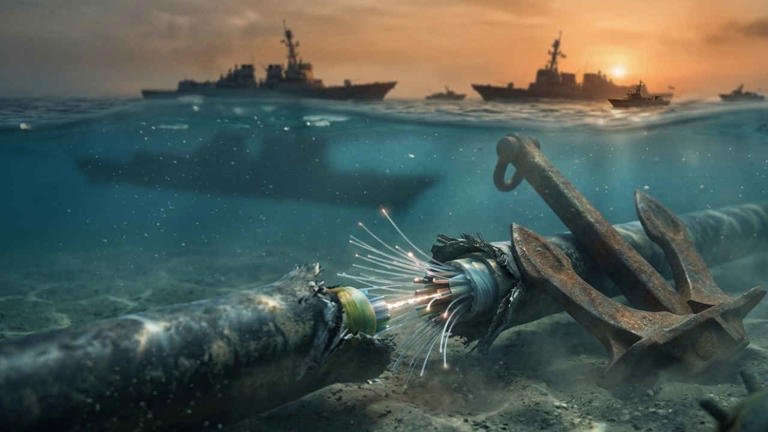
When we hear about the “48-hour ultimatum” issued by the U.S. or the potential blockade of the Strait of Hormuz, our minds immediately go to the price of petrol and the global oil supply. But as someone who manages digital infrastructure and news portals like newsforyou.live, I am looking at a different kind of “flow” that could be under threat: your data.
We often forget that the same geographical chokepoints that carry the world’s oil also house the “nerves” of the global internet.
The Underwater Reality: Subsea Cables
The Middle East, and specifically the regions surrounding the Strait of Hormuz and the Red Sea, is one of the world’s most critical junctions for underwater fiber-optic cables. These cables are the backbone of the internet, carrying nearly 99% of all transcontinental data traffic.
If the conflict between the U.S., Israel, and Iran moves from “missile posturing” to active maritime sabotage, the digital fallout could be immediate:
- Latency Spikes: If a major cable like the SeaMeWe-5 or AAE-1 is damaged—either accidentally by an anchor in a war zone or intentionally through sabotage—data must be rerouted. This leads to slower speeds and higher “ping,” affecting everything from international business calls to your favorite streaming services.
- Regional Blackouts: For countries in the immediate vicinity, a single cable cut can lead to near-total internet outages until repairs can be made—a task that is nearly impossible in an active combat zone.
Cyber Warfare: The First Strike
As I noted in my previous report, Iran’s energy minister has already reported “heavy damage” to water and energy infrastructure due to cyber-attacks. In 2026, we must realize that Cyber-Warfare is no longer a secondary concern; it is the opening move.
If the conflict escalates, we could see:
- DDoS Attacks: Massive “Distributed Denial of Service” attacks targeting financial institutions and news outlets to spread confusion.
- Infrastructure Hacking: Attempts to breach the software that manages power grids and communication satellites.
What This Means for India
India sits at a unique position. We rely heavily on these western-facing cables to connect with Europe and the U.S. While we have “Eastern” routes through Singapore, a major disruption in the Middle East would put immense pressure on those remaining lines. For our IT sector, which thrives on 24/7 connectivity, a “digital blockade” is just as scary as an oil blockade.
The Bottom Line
The Strait of Hormuz is more than a shipping lane; it is a digital artery. As the clock ticks toward President Trump’s deadline, we aren’t just watching the price of a barrel of oil—we are watching the stability of the global web.
Editorial Notes (AdSense Ready)
- This article takes a “tech-first” approach to a geopolitical story, which helps differentiate newsforyou.live from standard political news sites.