
By Dharmesh Prajapati
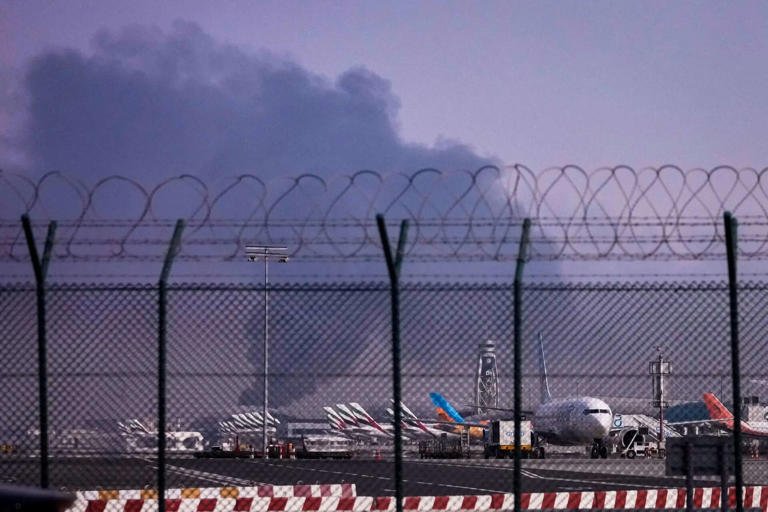
The Middle East has been on the boil for the past 49 days, with the conflict beginning after the US and Israel targeted thousands of sites in Iran, killing several high-ranking officials.
Gulf states have since borne the brunt of Iran’s retaliation, facing multiple attacks on energy facilities and civilian infrastructure, raising concerns over regional stability and economic security.
Against this backdrop, UAE ambassador to India Abdulnasser Jamal Alshaali has said the country has faced 2,890 missile and drone attacks since February 28, calling them “unprovoked” strikes and urging stronger international action against attacks on civilian infrastructure and maritime security. He made the remarks in an interview with ANI.
UAE says ‘did not seek war’
Alshaali said the UAE’s position has remained consistent, stressing that the country did not seek the conflict and had clearly stated its territory would not be used to launch attacks against Iran.
“Our position has always been consistent and clear throughout. We did not seek this war, and before its outbreak, the UAE made it very clear that its territory and airspace would not be used to launch attacks against Iran. That commitment was made in good faith, and Iran chose to violate it,” he said.
He added that any lasting resolution must address core concerns, including Iran’s nuclear programme, ballistic missiles and drones, and affiliated proxies, along with ensuring the complete and unconditional reopening of the Strait of Hormuz and an end to attacks on civilians.
Strait of Hormuz tensions and global impact
The UAE envoy said the Strait of Hormuz remains effectively restricted, alleging that Iran is controlling access and imposing conditions on maritime transit.
“The Strait of Hormuz is not open. Access is being restricted, it is being conditioned, it is being controlled. Iran is requiring ships to obtain permission to transit and charging tolls of over $2 million per vessel. That is not freedom of navigation,” he said.
He warned that such measures were impacting not just the UAE but also India and the wider global economy, noting that nearly a fifth of the world’s energy supplies pass through the strait each day.
“For India, the implications are considerable. India is the world’s largest crude oil importer, and a significant share of that supply, along with LPG, moves through this passage,” he said.
India-UAE coordination and diaspora safety
Alshaali underscored the close coordination between India and the UAE during the crisis, particularly regarding the safety of Indian nationals.
“The four million Indians in the UAE are not guests. They are part of the fabric of this country. Their protection is treated with the same seriousness as the protection of UAE nationals,” he said.
He added that both governments have maintained continuous communication since the start of the conflict, with contingency and evacuation protocols in place and regularly reviewed. He also referenced external affairs minister S Jaishankar’s visit on April 11 and 12 as part of ongoing high-level engagement.
Energy ties and supply resilience
The envoy said the UAE has taken steps to mitigate disruptions, including rerouting cargo shipments to Fujairah, which lies outside the Strait of Hormuz.
He highlighted the strength of India-UAE energy ties, noting a $3 billion LNG supply deal signed earlier this year and a shared goal of reaching $200 billion in bilateral trade by 2032.
“Our energy ties with India are not built on a single pipeline or a single contract. This is a deep architecture built for resilience and will overcome this period,” he said.
Monitoring ceasefire developments
Alshaali said the UAE is closely monitoring the ceasefire between the United States and Iran and is seeking clarity on its terms to ensure full compliance.
“We are closely monitoring the ceasefire… to ensure Iran’s full adherence to an immediate halt to all hostilities and the complete and unconditional reopening of the Strait of Hormuz,” he said.
The remarks come amid continued uncertainty in West Asia, with diplomatic efforts underway to stabilise the region and safeguard critical trade and energy routes.
Escalation, Operation Epic Fury and Strait of Hormuz crisis
The latest escalation in West Asia has unfolded against the backdrop of “Operation Epic Fury,” a US-Israeli military campaign launched in late February 2026 targeting Iranian military infrastructure. The operation, which included extensive airstrikes and cyber operations, was aimed at degrading Iran’s missile and air defence capabilities following rising regional tensions.
In response, Iran escalated its maritime posture in the Persian Gulf and Strait of Hormuz, a vital global energy chokepoint through which nearly a fifth of global oil shipments pass. Iranian forces were reported to have disrupted commercial shipping lanes, imposed movement restrictions on vessels, and effectively challenged freedom of navigation in the region.
The situation further escalated when Iran moved to assert control over parts of the Strait of Hormuz, leading to a de facto blockade scenario that disrupted global shipping routes. Several commercial vessels were forced to reroute or halt operations, triggering international concern over energy security and supply chains.
The crisis widened after US President Donald Trump announced a naval blockade targeting Iranian ports and vessels linked to Iranian maritime activity, following failed diplomatic negotiations in Pakistan. The Islamabad talks, involving US and Iranian officials, collapsed without a breakthrough, despite intensive mediation efforts.
The breakdown of the Pakistan-mediated talks marked a turning point, with both sides escalating military and economic pressure instead of pursuing immediate de-escalation. Subsequent naval deployments and mine-clearing operations intensified tensions in the Strait of Hormuz, further straining global energy markets.
Pakistan’s diplomatic role also came under scrutiny after the talks failed to produce an agreement, despite its attempts to facilitate dialogue between the two sides. Analysts say the collapse of negotiations reduced the space for diplomacy at a critical moment in the conflict.
Against this backdrop, the Strait of Hormuz has remained one of the most volatile flashpoints in the crisis, with competing claims over maritime control and repeated warnings from global shipping authorities.
International concern has since grown over the risk of prolonged disruption to energy flows, inflationary pressure on oil markets, and the potential for broader regional escalation involving multiple state actors.
The UAE envoy’s remarks add to ongoing diplomatic exchanges highlighting civilian impact, maritime insecurity and the need for international legal accountability as tensions continue to shape West Asia’s evolving conflict landscape.
🤝 Let’s Build a Cleaner Digital Future Together
Strategic IT audits? Device optimization for your workforce? Navigating the tech trends of 2026? Dharmesh is here to collaborate.
Dharmesh Prajapati, IT Infrastructure Specialist and Chief Editor.
📞 Connect with Dharmesh Prajapati: +91 7359585035 Call / WhatsApp
🌐 Website: ambeinfotech.com
🗞️ Read more tech insights on: newsforyou.live