
By Dharmesh Prajapati
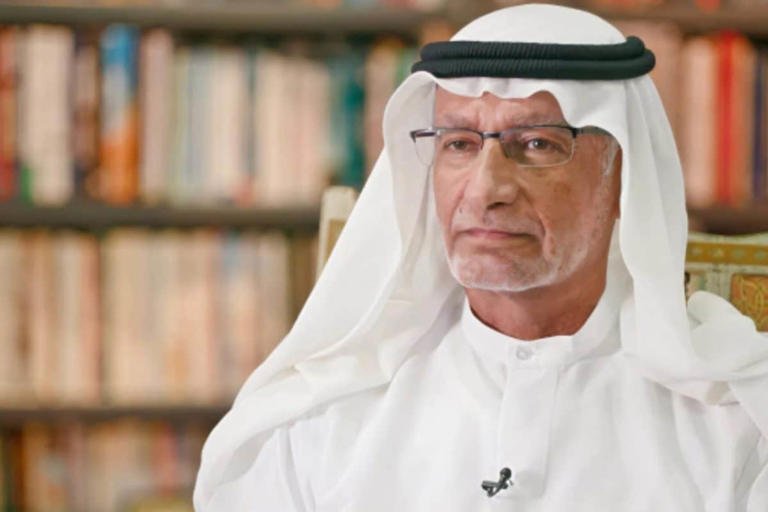
In a move that has sent shockwaves through diplomatic corridors in Washington, a prominent UAE-based political commentator and academic has publicly called for the closure of American military bases in the Emirates. This isn’t just an isolated opinion; it reflects a burgeoning sentiment across the Gulf in April 2026: the era of absolute dependence on the United States for security is rapidly coming to an end.
At newsforyou.live, we are tracking this shift closely as it redefines the power dynamics of the 21st century.
1. The Call to Action: Why Now?
The commentator’s argument centers on the idea of “Strategic Autonomy.” For decades, the Al Dhafra Air Base has been a cornerstone of US operations in the Middle East. However, the narrative is changing:
- Failure of Protection: There is a growing perception that the US has been slow to react to regional threats (like the drone strikes seen in previous years) unless they directly align with American interests.
- Economic Diversification: As the UAE builds stronger economic ties with the BRICS+ nations, including China and India, maintaining large-scale US military footprints is seen as a liability that complicates its “multi-aligned” foreign policy.
- The “No Longer Needed” Stance: The UAE has significantly bolstered its own defense capabilities, purchasing advanced hardware from diverse sources (including French Rafales and Chinese drones), leading many to ask: Why do we still need a foreign landlord?
2. The Global Context: Middle East 2026
The current crisis in the Strait of Hormuz (as we reported earlier) has acted as a catalyst. While the US focuses on naval blockades and its own political battles, the UAE and its neighbors are looking toward regional solutions.
- Regional Alliances: The normalization of ties with Iran and the strengthening of the Saudi-UAE-India corridor have created a new security architecture that doesn’t necessarily include a permanent US “policeman.”
- The Trump Factor: With the current US administration’s “America First” approach and its focus on internal politics and the Iran-Carter comparison, Gulf leaders are wary of being used as pawns in Washington’s domestic games.
3. Tech-Driven Truth: My Analysis
As an IT infrastructure specialist at Ambe Infotech, I often tell my clients that “redundancy is key, but dependency is a risk.” The UAE is applying this logic to its national security.
- Defense Sovereignty: Just as France is ditching Windows for Linux (as discussed in my previous report), the UAE is seeking “open-source” security. They want to be able to operate their defense systems without needing a “software key” or permission from the US.
- The India Connection: For us in India, this shift is massive. A UAE that is less dependent on the US is a UAE that is more integrated with the Indian security and economic framework. We are looking at a future where regional stability is managed by regional players.
🤝 Navigating a Multi-Polar World Together
Strategic geopolitical analysis? Infrastructure resilience in volatile regions? Decoding the 2026 global shifts? Dharmesh is ready to collaborate.
Dharmesh Prajapati, IT Infrastructure Specialist and Chief Editor.
📞 Connect with Dharmesh Prajapati: +91 7359585035 Call / WhatsApp
🌐 Website: ambeinfotech.com
🗞️ Stay ahead of the curve at: newsforyou.live
Editorial Note: This report is based on recent op-eds and televised commentary from the UAE on April 21, 2026. While official government policy remains allied with the US for now, the public discourse suggests a significant internal debate regarding the future of foreign military presence.