By Dharmesh Prajapati
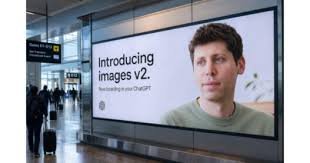
The global AI visual race has entered a new phase. OpenAI CEO Sam Altman personally unveiled ChatGPT Images 2.0, the first image-generation model with built-in reasoning capabilities. Analysts hailed it as a leap from GPT-3 straight into the GPT-5 era. This breakthrough not only eliminates past weaknesses in complex layouts and typography but also delivers pixel-level precision—capable of engraving text on a single grain of rice and flawlessly rendering Chinese, Japanese, and Korean scripts.
Google’s Gemini, armed with its “Nano Banana 2” model, was caught off guard. The question now is whether Images 2.0 represents a creative revolution or a disruptive force that could displace human creators and spark copyright battles.
Pixel-Perfect Multilingual Mastery
Where earlier AI tools faltered with non-Latin languages, Images 2.0 breaks barriers. In live demos, it generated ultra-small fonts, intricate UI elements, and coherent multilingual text with photographic realism. The rice-grain engraving of “GPT image 2” stunned viewers, symbolizing a new threshold in accuracy. For designers, the long-standing frustrations of garbled typography and collapsed details appear to be solved.
Thinking Mode: A Visual Brain with Reasoning
Beyond instant rendering, Images 2.0 introduces a “Thinking Mode.” Here, the system acts less like a passive tool and more like a reasoning partner—searching the web in real time, self-checking outputs, and updating knowledge through December 2025. With a single command, it can produce eight consistent, high-definition images, format academic posters, or generate ad creatives across multiple platforms simultaneously. The implications for design and commercial workflows are profound.
The Gemini Showdown and Ethical Concerns
Arena rankings show Images 2.0 dominating all seven text-to-image categories, outscoring Gemini by 242 points. While Gemini limits usage through tiered quotas, OpenAI’s aggressive open strategy is rapidly capturing market share. Yet controversy looms: giving image AI both reasoning and web access raises the risk of deepfakes indistinguishable from reality.
As tech giants battle for supremacy, the industry faces a dilemma—are these tools unleashing boundless creativity, or opening Pandora’s box of ethical and economic disruption? The visual AI arms race has begun, and its consequences will ripple far beyond the design world.