
By Dharmesh Prajapati
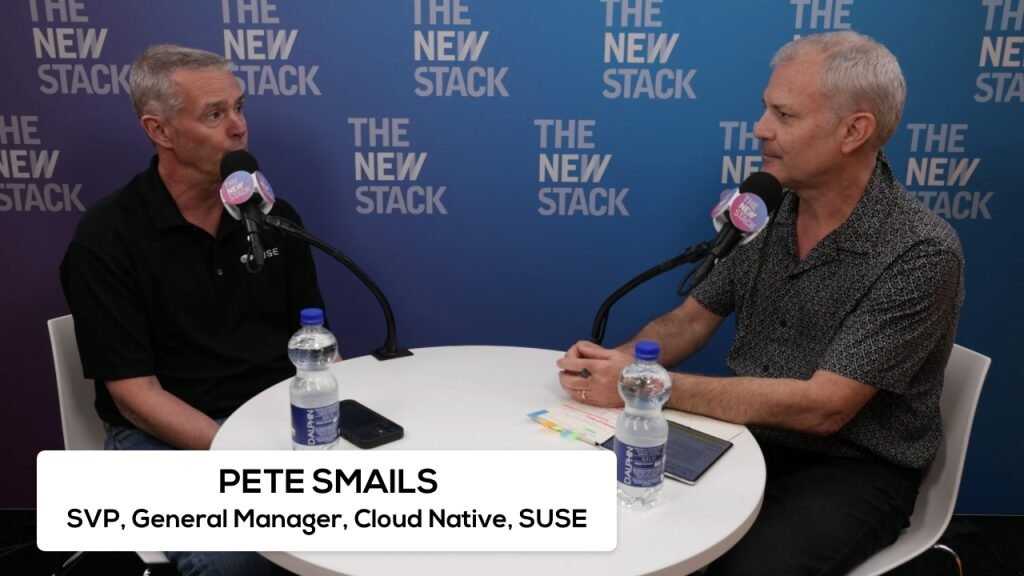
As we move deeper into 2026, the conversation around Artificial Intelligence has shifted from “what can it do?” to “where can we safely run it?” For enterprises, the bottleneck isn’t just model performance; it is the infrastructure required to operationalize AI responsibly across fragmented environments.
SUSE, a veteran in open-source Linux and Kubernetes, has repositioned itself as the “Sovereign Infrastructure Layer” for the AI era. Rather than competing with AI model giants, SUSE is building the plumbing—the secure, auditable, and platform-agnostic foundation—that allows businesses to bridge the gap from experimental pilots to production-scale AI.
Here is how SUSE is positioning itself as the critical infrastructure layer for the AI era.
1. Defining “Infrastructure for AI” vs. “AI for Infrastructure”
At SUSECON 2026, the company clarified its two-pronged strategy:
- Infrastructure for AI: Providing the bedrock (Linux, Kubernetes, and virtualization) optimized for GPU-heavy workloads, ensuring they are observable, governable, and secure.
- AI for Infrastructure: Embedding “Agentic AI” into the platform itself to automate day-to-day operations. This includes the industry-first Agentic AI Ecosystem within SUSE Rancher Prime, where specialized AI “agents” act as an automated SRE (Site Reliability Engineering) crew.
2. The “AI Factory” with NVIDIA
A cornerstone of SUSE’s 2026 strategy is the SUSE AI Factory with NVIDIA. This is not just a product but a blueprint for building repeatable AI stacks.
- Accelerated Orchestration: By integrating NVIDIA Run:ai for GPU orchestration and NIM microservices, SUSE allows platform teams to treat expensive GPU resources as shared, schedulable assets within Kubernetes.
- Multi-Tenancy: Using technologies like K3k, SUSE enables virtual cluster GPU multi-tenancy. This allows multiple teams to share hardware with full isolation, maximizing ROI on expensive AI silicon.
3. Sovereignty and Choice as a Strategic Moat
In an era of vendor lock-in, SUSE is doubling down on Digital Sovereignty. Their positioning assumes that enterprises want the freedom to move AI workloads between on-premises data centers, public clouds, and air-gapped environments.
- Private Enterprise AI: SUSE defines “private AI” not as restricted to a single building, but as ownership of intelligence. By using SUSE Linux Enterprise (SLE) 16 and Rancher Prime, organizations maintain an auditable trace of their data and model provenance, meeting strict regulatory requirements without sacrificing the ability to pivot between different Large Language Models (LLMs).
4. Operationalizing the “Tiny Edge”
The acquisition of the Losant IoT platform in early 2026 completed SUSE’s “Edge-to-Cloud” narrative.
- SUSE Industrial Edge: This allows AI to live where the data is born—at the factory floor or on remote sensors (the “Tiny Edge”).
- Data Normalization: Their stack now normalizes data from diverse industrial sources (Siemens, Beckhoff, etc.) into a unified view, creating a clean data pipeline that fuels edge-based Generative AI and predictive maintenance models.
5. Bridging the Production Chasm
Many AI projects fail when moving from a data scientist’s laptop to a governed IT environment. SUSE positions its stack as the “Production Shortcut”:
- Zero-Trust Guardrails: Every AI component in the SUSE stack is built using their Common Criteria certified build system, ensuring a secure software supply chain.
- The Model Context Protocol (MCP): By supporting the open MCP standard, SUSE’s AI assistant (“Liz”) can securely connect to an enterprise’s existing tools (like Jira or internal wikis) to resolve infrastructure issues in real-time, effectively turning documentation into actionable intelligence.
The Verdict
SUSE’s message for 2026 is clear: Open infrastructure is no longer just about freedom—it is about operational resilience. By focusing on the “boring” but essential parts of the stack—security, GPU multi-tenancy, and cross-platform management—SUSE is making itself the indispensable partner for enterprises that need to run AI at scale without losing control of their data or their budget.
Connect with Dharmesh Prajapati
+91 7359585035 Call / WhatsApp
Website:ambeinfotech.com
Read more onnewsforyou.live