
By Dharmesh Prajapati
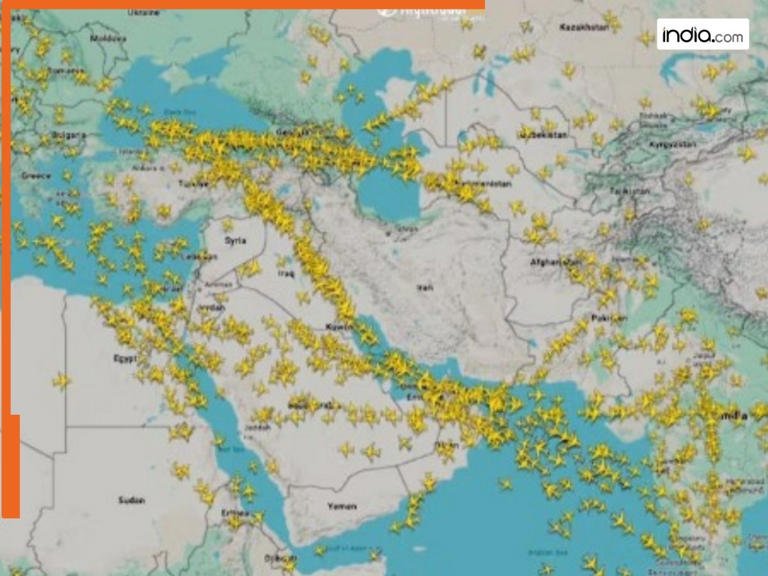
Iran has decided to allow flights to operate from some parts of the country. Iran’s Civil Aviation Authority announced this on Saturday and said that it has partially reopened its airspace for international flights that pass through the eastern part of its territory. The airspace was closed due to the war that broke out after the Israeli and US attacks on Iran on February 28.
A statement issued by the authority said, “Air routes in the eastern part of Iran’s airspace are open for international flights. Many airports have also been reopened.” Despite the opening of the airspace by Iran, airlines are taking precautions in taking this route. Flight tracker websites have reported that no international flights passed through Iran in the initial hours of the airspace reopening.
Iran also softens its stance on the Strait of Hormuz
Iran also announced the opening of the Strait of Hormuz a day earlier on Friday. Iranian Foreign Minister Abbas Araghchi announced on social media Friday that the Strait of Hormuz has been fully reopened to all commercial vessels for the remainder of the ceasefire.
Iran closed the Strait of Hormuz, one of the world’s busiest oil shipping routes, in response to the US-Israeli attack in February. Iran was allowing only ships approaching it to pass through the sea route, specifically blocking ships from the US, Israel, and their allies.
A ceasefire was declared on April 8th after a fierce 39-day war between Iran and the US-Israeli coalition. Currently, a two-week ceasefire is in effect between the two sides (April 22nd). Under Pakistan’s mediation, both sides are negotiating a ceasefire agreement. A second round of talks is expected soon in Islamabad.
A key issue in the agreement between Iran and the US was the ceasefire in Lebanon. On Thursday, Donald Trump announced a ceasefire in Lebanon. Following this, Iran has talked about lifting the blockade from the Strait of Hormuz and opening the airspace. These steps taken by Iran are expected to bring peace back to the region.
West Asia experts say that Iran’s decision to open the airspace after the Strait of Hormuz is a positive sign for the entire region. However, security concerns still remain. Until a permanent agreement is reached between the two sides, concerns for ships and airlines will remain.