
By Dr. Hiral

When we talk about wellness, we often focus on the heart, the lungs, or the skin. However, as a medical professional, I’ve seen how urological health—the health of the urinary tract and the male reproductive system—acts as a critical barometer for your overall well-being.
Urological issues aren’t just “old age problems.” They evolve with you. Understanding what to watch for in each decade can be the difference between a quick fix and a chronic condition.
In Your 30s: The Decade of Prevention and Stones
In your 30s, your body is generally at its peak, but lifestyle habits begin to catch up.
- Kidney Stones: This is the prime decade for the onset of kidney stones. High-stress jobs, excessive caffeine, and a diet high in sodium often lead to dehydration—the number one cause of stones.
- UTIs and Prostatitis: For women, recurrent Urinary Tract Infections (UTIs) can become an issue. For men, we watch for prostatitis (inflammation of the prostate), which can cause pelvic pain or frequent urges to urinate.
- The Check-In: Focus on hydration. If you aren’t drinking enough water to keep your urine pale yellow, you are putting your kidneys at risk.
In Your 40s: Hormones and Habits
The 40s are a transition period. This is when the “silent” changes start to manifest.
- Overactive Bladder (OAB): You might notice you can’t “hold it” as long as you used to. This isn’t just a sign of aging; it’s often a sign of changes in bladder muscle signals.
- Erectile Dysfunction (ED): For men, ED in the 40s is often a “canary in the coal mine” for heart health. Because the arteries in the pelvic region are smaller than those near the heart, urological symptoms often appear years before cardiovascular ones.
- The Check-In: Regular screenings for blood pressure and glucose are essential here, as diabetes and hypertension directly impact urological function.
In Your 50s: The Benchmark for Screening
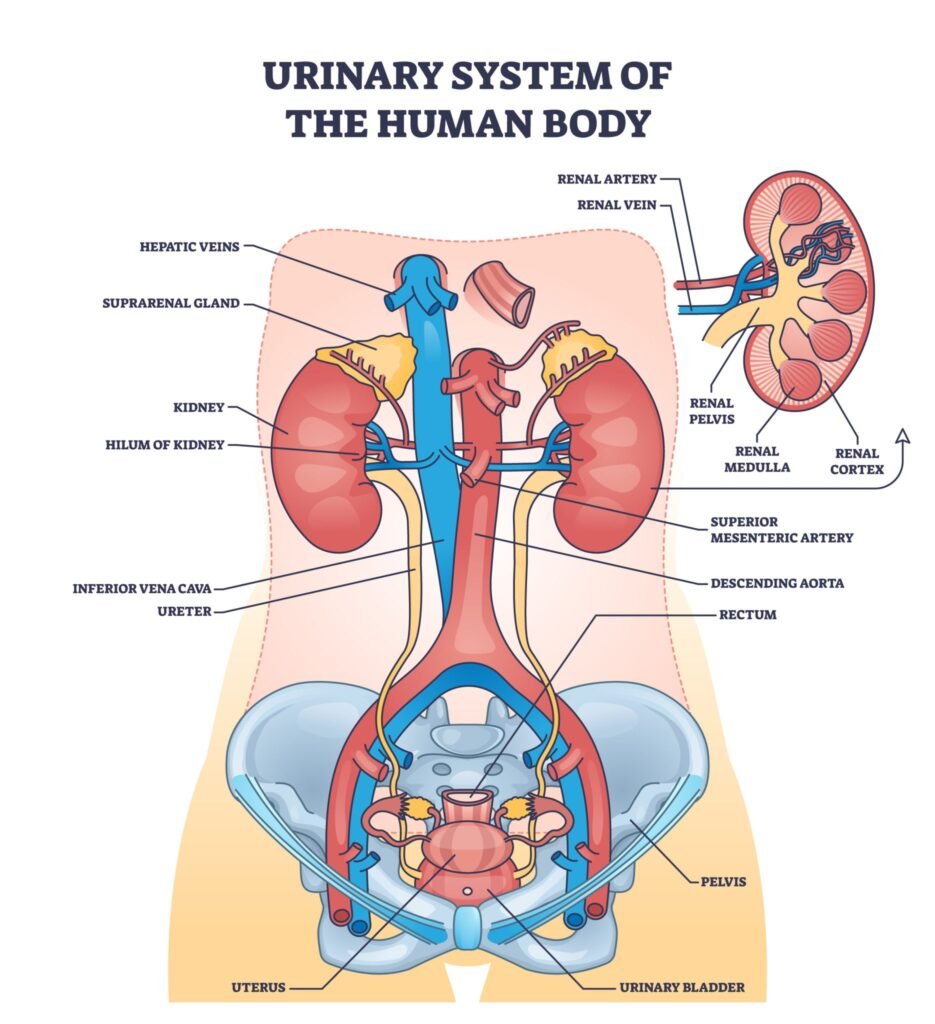
This is the decade where proactive screening becomes non-negotiable.
- Benign Prostatic Hyperplasia (BPH): Most men in their 50s will experience some degree of prostate enlargement. If you’re waking up multiple times a night to use the bathroom or feel like your bladder isn’t empty, it’s time for an evaluation.
- Incontinence: For women, the hormonal shifts of menopause can weaken the pelvic floor, leading to stress incontinence (leaking when coughing or sneezing).
- Cancer Screenings: The 50s are the critical window for Prostate Specific Antigen (PSA) tests for men and monitoring for hematuria (blood in the urine), which can be an early sign of bladder or kidney cancer.
Final Thought: Your urological system shouldn’t be a source of embarrassment. It is a complex, vital system that requires maintenance just like any other part of your body. If you notice a change—don’t wait for it to become a crisis.
Editorial Notes
- Educational, clinical, and encouraging. The goal is to destigmatize urological issues by framing them as part of a natural aging progression.