
To: News Desk, Newsforyou.live
From: Dharmesh Prajapati, Senior International Correspondent
Subject: Special Report – The Hormuz Stranglehold and the South Asian Crisis
Team, following the confirmation, here is the specialized report focusing on the direct economic pain this war is inflicting on South Asia, particularly India and Pakistan. This isn’t just an energy story; it’s a food security and social stability story. I’ve broken down the data on alternative routes (or lack thereof) and the terrifying math of the price hikes.
Request: We must feature the infographics prominently. The map of the energy blockade and the chart showing the price of crude are essential for readers to grasp the scale of the emergency. Let’s lead with the image from Mumbai’s port.
Hormuz Held Hostage: How the US-Iran War is Strangling South Asia
By Dharmesh Prajapati March 19, 2026
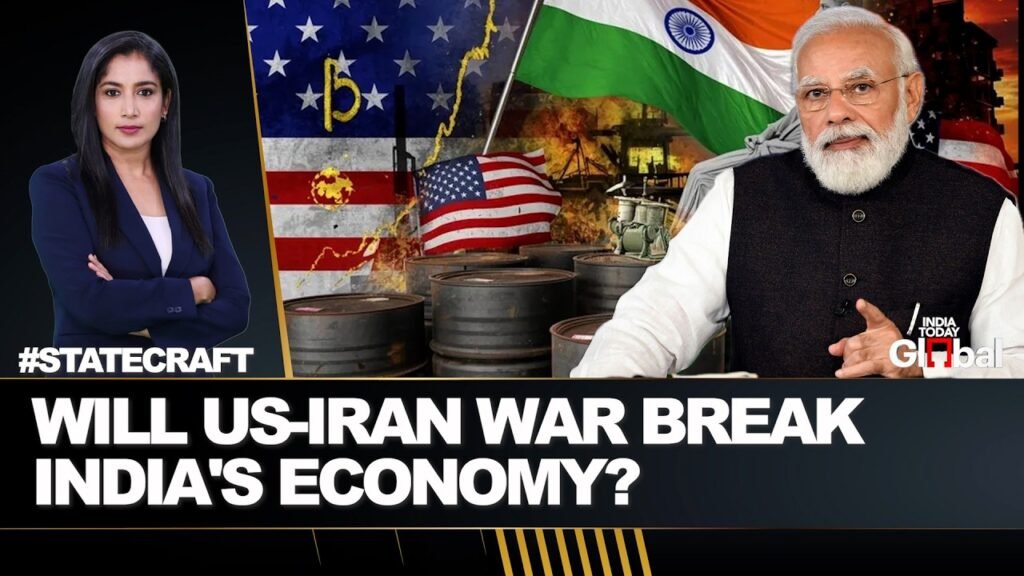
MUMBAI/KARACHI – As the United States military quietly acknowledges the strategic stalemate in its air campaign against Iran, and President Trump attempts to bully reluctant allies into a “coalition of the willing,” the true cost of “Operation Epic Fury” is being measured 3,000 kilometers away. For the nations of South Asia, particularly India and Pakistan, the war is no longer a distant news event—it is an economic chokehold that threatens domestic stability.
The closure of the Strait of Hormuz by Iran’s Islamic Revolutionary Guard Corps (IRGC), using low-cost swarming drones and mines, has cut off the primary artery for energy imports into the region. The result is a dual crisis of spiraling inflation and paralyzed industry.
The Energy Chokehold
South Asia’s dependence on the Persian Gulf is absolute. India, the world’s third-largest oil consumer, imports over 85% of its crude oil, with nearly two-thirds of that passing through the Strait of Hormuz. Pakistan’s reliance is even more acute, with over 90% of its oil and nearly all of its Liquefied Natural Gas (LNG) arriving via this single route.
Visualizing the Blockade:
The image below illustrates the strategic bottleneck that is holding the region’s economies hostage. The map highlights the major energy shipping routes originating from key oil and gas terminals in Kuwait, Iraq, Iran, Saudi Arabia, and Qatar, all converging at the narrow, 33-kilometer wide point of the Strait of Hormuz. The red markers indicate the areas of active IRGC disruption, demonstrating how effectively a small naval force can paralyze the entire corridor.
“Our economy doesn’t run on hopes and prayers; it runs on crude,” a senior official in India’s Petroleum Ministry told me. “We have strategic reserves, yes, but they were built for a 10-day disruption, not a 10-month war. If Hormuz doesn’t open soon, our industrial base will simply stop moving.”
The Inflationary Shockwave
The immediate consequence of the blockade has been a catastrophic spike in global energy prices, which is being passed directly to South Asian consumers. Brent crude, which was trading around $80 per barrel before the war, skyrocketed past $180 per barrel within days of the Hormuz closure and now hovers precariously near $200.
The Price of War:
The chart below tracks this explosive rise, comparing the price of Brent Crude oil with a composite consumer price index for India and Pakistan. The correlation is undeniable: as the energy lifeline is choked, inflation surges, eroding the purchasing power of millions and threatening food security as transportation costs spiral.
The Illusory Alternatives
There are no quick fixes. While alternative pipelines exist, such as the East-West Pipeline across Saudi Arabia or the Abu Dhabi Crude Oil Pipeline (ADCOP), their capacity is insufficient to replace the 21 million barrels of oil that flow through the Strait every day. Furthermore, Iran has proved that these pipelines are not beyond the reach of its Shahed drones, as seen in the recent strikes on the Ras Tanura refinery.
For South Asia, relying on shipments from West Africa or the United States means significantly higher freight costs and longer transit times—a cost structure that struggling economies cannot absorb.
A Crisis of Stability
The real danger is not just an economic slowdown, but social collapse. In Pakistan, the currency has devalued by another 25% since the war began, making imported essentials unaffordable for the average citizen. India is facing demands for massive fuel subsidies that the government cannot afford, potentially derailing infrastructure spending and critical development programs.
As President Trump’s desperate attempt to “outsource” the war falters, and the internal dissent in the State Department grows, South Asia sits on a precipice. The lessons from Ukraine regarding energy interdependence are being relearned at a devastating cost. The “Epic Fury” of Washington is creating a very real desperation on the streets of Mumbai and Karachi.