
By Dharmesh Prajapati Published: March 19, 2026
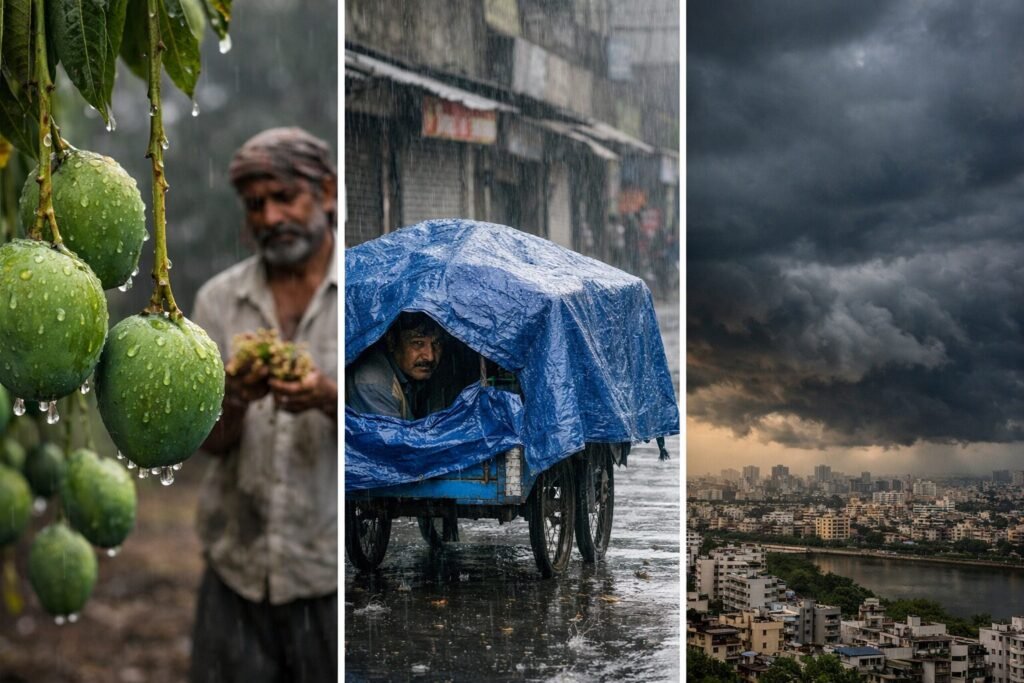
In Gujarat, the word “summer” (unhalo) has traditionally been synonymous with oppressive heat, bustling markets selling earthen pots, and the frantic, chaotic arrival of the beloved Kesar mango. By mid-March, the rhythm of life usually shifts to beat the heat: vendors begin hawking refreshing Variyali Sharbat (fennel drink), and children eye the ripening fruit hanging heavy on the trees.
This year, that rhythm has been violently disrupted. Instead of the scorching sun, the sky over Surat, Ahmedabad, and the coastal regions has turned an unsettling, stormy gray. The air isn’t hot; it’s uncharacteristically damp and breezy. The sudden, unseasonal rainfall sweeping across the state has left farmers, traders, and everyday citizens in a state of shock and anxiety.
The Silent Mango Farms
For Gujarat’s farmers, the climate has been a cruel prankster. “We have not yet eaten the mangoes,” laments Sureshbhai Patel, a mango orchard owner from Valsad. “This rain came just as the initial Kesar crop was flowering. The water washes away the pollination, and the humidity invites fungal rot. It’s not just about a missing dessert; for us, it’s about losing our entire investment.”
The Unseasonal Rains (known locally as Mavthu) are not unusual for late winter, but in mid-March, as summer attempts to assert itself, they are devastating. For every millimeter of rain that falls now, farmers see lakhs of potential revenue evaporate.
The Sharbat Paradox
The change has also paralyzed the micro-economy of the street corner. The Sharbat and Lassi vendors, who usually see their busiest season begin now, are staring at quiet stalls. “If it’s cool outside, who will buy the Sharbat?” asks Mohan, who sets up a small stand near Surat’s bustling Chowk Bazar. “We have not yet sold the Sharbat we prepared for the anticipated early heat. We are losing business not to the cold, but to this weird, rainy-summer confusion.”
The traditional markers of Gujarat’s pre-monsoon life—dust devils and dehydration—have been replaced by umbrellas and localized flooding.
Is This the Effect of a Distant War?
Amidst the confusion, the people are looking for answers beyond the weather report. In local Chai pe Charcha (tea-side chats), a new, darker theory has taken root. As the conflict in Western Asia intensifies, involving major world powers, many Gujaratis wonder if the massive environmental shocks of modern warfare—detonations, massive oil fires, and the redirection of atmospheric energy—are finally hitting home.
There is a palpable sense of injustice. The sentiment echo’s in the sentiment of many average citizens: “If this rain and climate shift is the effect of the war happening elsewhere, kindly give punishment to the leaders who started it—like Donald Trump and his adversaries—and not to the people of Gujarat who are not involved, who just want to sell their Sharbat and harvest their mangoes.”
While meteorologists point to complex weather patterns like the ‘Western Disturbances’ being modified by overall climate change, for the farmers and traders of Gujarat, the cause feels profoundly man-made and unfairly punitive. As they watch the rain destroy their livelihoods, they are not praying for rain—they are praying for summer.
Editorial Notes
This piece explores the human and economic impact of unseasonal, intense rainfall in Gujarat during March 2026. The article moves beyond simple weather reporting to capture the localized cultural and economic devastation, specifically on the mango harvest and small street vendors. It also accurately reports a sentiment emerging among the public: a widespread (though scientifically debatable) belief that these climate irregularities are a direct consequence of environmental disruptions caused by the intensified global conflict.