
By Dharmesh Prajapati for newsforyou.live
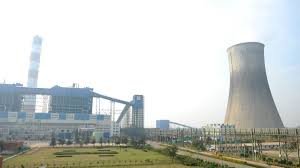
India’s energy map may soon witness one of its most dramatic transformations yet: aging thermal power stations built on coal and smoke could be reborn as the next generation of nuclear energy hubs.
In a significant development, three old thermal power plant sites have reportedly been shortlisted for potential nuclear power projects as India accelerates its long-term clean energy ambitions. The move reflects a larger strategy to repurpose retired or underutilized thermal infrastructure instead of acquiring entirely new land parcels, a process often tangled in environmental clearances and local resistance.
But while the blueprint sounds efficient on paper, the ground reality is proving far more complex.
At the center of the challenge lies one critical issue: exclusion zones.
Nuclear power plants require large safety buffer areas around reactor sites where residential or commercial activity is heavily restricted. Many older thermal plants, originally built decades ago on the outskirts of cities, are now surrounded by growing urban settlements, industries, and highways. What was once isolated industrial land has gradually become crowded territory.
That creates a difficult equation.
Coal plants can operate relatively close to populated areas, but nuclear facilities demand stricter international safety norms. Authorities assessing old thermal sites are reportedly finding that many locations fail to meet the required exclusion zone criteria despite already having transmission lines, cooling water access, and industrial infrastructure in place.
Still, the government sees strategic advantages in repurposing these sites.
India’s electricity demand is climbing rapidly alongside industrial expansion, electric mobility adoption, and AI-driven digital infrastructure growth. At the same time, global pressure to reduce carbon emissions is forcing nations to rethink dependence on coal-fired generation.
Nuclear energy, once viewed cautiously after disasters like Fukushima and Chernobyl, is now quietly returning to the global energy conversation. Unlike solar and wind, nuclear power provides continuous baseload electricity without depending on weather conditions.
For India, the timing is crucial.
Several aging thermal plants are already nearing the end of operational viability due to pollution norms, rising coal transportation costs, and lower efficiency. Transforming these industrial graveyards into clean-energy engines could save both land acquisition costs and years of project delays.
Yet engineers and policymakers face a maze of technical and social concerns.
Apart from exclusion zones, issues such as seismic safety, water availability, evacuation planning, and radioactive waste management remain under scrutiny. Public perception is another major hurdle. Communities accustomed to thermal plants may still resist nuclear facilities due to fears around radiation and long-term environmental risks.
Ironically, the same chimneys that once symbolized industrial progress are now becoming relics of an older energy age.
India’s future grid may no longer be powered by mountains of coal arriving in freight trains. Instead, silent reactors hidden behind reinforced domes could become the new backbone of the nation’s electricity network.
The transition, however, will not happen overnight.
Repurposing thermal sites into nuclear facilities is less like renovating a building and more like replacing the heart inside a living machine while the country continues demanding uninterrupted power.
If successful, the project could redefine how India balances energy security, urban growth, and climate responsibility in the decades ahead.
For now, though, the exclusion zone challenge stands like an invisible fence around that ambition, reminding policymakers that in the nuclear era, space itself becomes part of the technology.